
x

Introducing IP Buddy: Your AI-Powered Guide to Intellectual Property

(NewsUSA) - The Intellectual Property Owners Education Foundation (IPOEF) launched IP Buddy (IPBuddy.ai) today, a first-of-its-kind AI-powered digital assistant designed to make understanding intellectual property (IP) more approachable, engaging, and accessible. Every day, we are surrounded by IP and therefore, IP Buddy is for everyone. From first-time inventors and growing startups to people who are simply curious about how IP works, IP Buddy (IPBuddy.ai) is here to guide users through patents, trademarks, copyrights, and trade secrets with clarity and confidence.

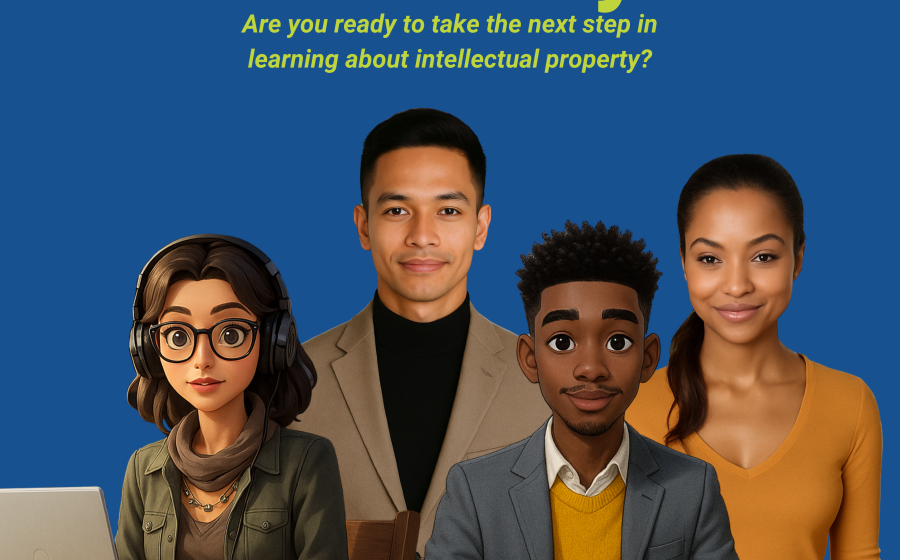
Built using a state-of-the-art language model similar to ChatGPT, IP Buddy is enhanced with specialized documentation and Retrieval-Augmented Generation (RAG) in order to deliver reliable, real-time answers tailored to your questions. IP Buddy users can choose their “buddy” from lifelike and cartoon AI-generated avatars that offer both audio and video responses for a more natural and engaging user experience. While not a substitute for professional legal advice, IP Buddy simplifies complex legal and technical IP concepts, making them easier to understand.

“IP Buddy represents a bold step in expanding opportunities for engagement with the intellectual property system,” said Kristen Lurye, deputy executive director for IPOEF. “By breaking down barriers to information, we empower more creators, inventors, and entrepreneurs of all ages to protect and grow their ideas.”

The launch of IP Buddy comes at a time when the strength of the U.S. innovation ecosystem is more important than ever. The U.S. intellectual property system supports this innovation, drives economic prosperity, and protects the ideas that shape our future. A stable and predictable intellectual property system is critical for incentivizing investment, fostering partnerships and delivering real-world solutions to global challenges. Yet a survey from the United States Intellectual Property Alliance reports that 70% of Americans struggle to differentiate between patents, trademarks, copyright, and trade secrets – the key pillars of the U.S. intellectual property system.

“Without strong IP protection, the breakthroughs we rely on—from life-saving healthcare technologies to the devices that power our daily lives—simply wouldn’t happen,” said Henry Hadad, president of the IPOEF board. “IP Buddy is here to help people understand and engage with this vital system.”

Visit IPBuddy.ai to explore IP Buddy and take your first step toward understanding and protecting your ideas.

About IPO Education Foundation:

As a subsidiary of the Intellectual Property Owners Association, the Intellectual Property Owners Education Foundation is a non-profit organization devoted to educational and charitable activities designed to teach and promote and understanding for the value of intellectual property rights and encourage innovation. To learn more visit www.ipoef.org.
 

Get the Scoop on AI Innovation

(NewsUSA) - The AI+ Expo, taking place on June 2-4 in Washington, D.C., seeks to spark discussions of ideas and initiatives related to the intersection of AI, emerging technology, and national security.

The AI+ Expo is sponsored by the Special Competitive Studies Project (SCSP), a nonprofit and nonpartisan initiative with a goal of making recommendations to strengthen America's long-term competitiveness in AI.

Don’t Miss the Drones

A highlight of this year’s AI+ Expo is a drone assembly workshop, where attendees can learn about the inner workings of drones, try simulators to learn and practice speed and agility skills, and watch professional pilot demos.

In addition, the Expo is hosting an interservice U.S. Military Drone Competition in partnership with the U.S. National Drone Association. The competition is open to all military service members, as well as high school and college students. Apply on the Expo website to sign up.

Engage in The Exchange: Innovation and National Security

This year’s Exchange is the fourth in a series, and brings together AI experts from the government, private sector, and scientific community to examine how to advance collaboration in pursuit of national security. The SCSP Exchanges were inspired by Dr. Ash Carter, the 25th Secretary of Defense, whose pioneering work initiated a transformational change across the U.S. government. The Exchange is set to continue the extraordinary discussions and connections made during previous events.

Hone Your Hacking Skills

The SCSP is teaming up with AGI House to co-host its third—and biggest—Hackathon yet! Join 300 hundreds of passionate builders for hands-on problem solving, rapid prototyping, and creative experimentation at the intersection of AI and real-world impact. Apply at the Expo website to secure your spot for a unique opportunity to push boundaries and build something meaningful.

Find Your New Career

This year’s Expo includes an ai+careers area for job seekers looking to level up their career as well as those seeking a better understanding of how AI is shaping the workforce.

The Talent Marketplace, hosted by ClearanceJobs, provides opportunities for meetings with employers from industry, academia, and government. Attendees can build a profile in the Cvent app to access on-site interviews, resume reviews, career coaching, and networking opportunities.

At the ai+careers Stage, attendees can join live conversations with experts on how AI and other emerging technologies are transforming work, education, policy, and security. Interactive booths provide opportunities to engage with organizations at the forefront of AI and emerging tech innovation.

Read More About It

A dedicated bookstore space will host engaging book talks, signings, discussions, and Q&As. Attendees can purchase books on AI, geopolitics, history, and technology, and meet their favorite authors.

The AI+ Expo is free and open to the public. Visit expo.scsp.ai to learn more.

Securing America’s Scientific Leadership Takes Innovation

(NewsUSA) - The United States was once the global leader in science and technology, but now other countries, notably China, are catching up, in part by leveraging data through artificial intelligence, according to experts at the Special Competitive Studies Project (SCSP), a nonprofit and nonpartisan initiative with a goal of making recommendations to strengthen America's long-term competitiveness in AI.

In a recent podcast, SCSP experts outlined how the U.S. must use data to our scientific advantage to maintain global leadership.

“Today's greatest scientific challenges – discovering life-saving therapeutics, achieving energy independence, creating new materials, and ensuring agricultural resilience – are tremendously complex, encompassing billions of variables, intricate system interactions, and patterns that emerge only across massive and diverse datasets,” said SCSP analyst Ananmay Agarwal in the podcast.

The SCSP experts offered suggestions for the new administration to strengthen the U.S. position with regard to scientific data:

Strengthen U.S. Data Sovereignty. Develop a "Made in America" Data Standards Framework prioritizing national security, innovation, and individual rights, and mandate federal agencies to use secure and transparent data practices aligned with national security priorities.

Streamline Data Sharing. While Prioritizing National Security. Create a "Secure Data Exchange Framework" to promote data sharing, but with stringent controls to protect sensitive information and prioritize national security.

Empower Rural Communities with Data Hubs. Create regional data hubs in rural and economically disadvantaged areas to harness the power of data for local development. Provide incentives for tech companies to operate in rural communities and implement data training programs tailored to local industries.

Establish Secure Research Enclaves with Allies. Create secure environments for collaborative research between the United States and our core allies, in part by developing facilities for joint research under strict access controls. Integrate allied personnel into U.S. laboratories and implement reciprocal arrangements with partners abroad.

Strengthen Screening for International Research Collaborations. Establish clearer guidelines for evaluating foreign partnerships in sensitive research fields, and require security reviews for universities and labs involved in research with foreign entities.

Establish an Allied Open Science Framework. Promote the co-development of open science standards among trusted allies to facilitate secure data and knowledge sharing. Create multilateral agreements to share non-sensitive data and host a summit to coordinate these efforts.

Expand U.S. Leadership in International Standards-Setting Bodies. Deploy senior diplomats and technical experts to international standards-setting organizations. Strengthen coalitions and host standards-setting activities in the U.S. with allied and partner nations.

“By embracing these recommendations, the United States can harness the power of data for scientific advancement, maintain its global leadership, and ensure a future where technological innovation benefits all Americans and its allies,” Agarwal emphasized.

Visit scsp.ai to learn more.

How Standards Will Help the United States Retain Global Tech Power

(NewsUSA) - The development of technical standards is an often overlooked, but is an essential element in global technology leadership. The United States must be proactive to develop these standards, in addition to technology research and innovation, to stay ahead of our top competitor, China, according to Ananmay Agarwal, an expert at the Special Competitive Studies Project (SCSP), a nonprofit and nonpartisan initiative with a goal of making recommendations to strengthen America's long-term competitiveness in AI.

In a recent podcast, Agarwal discussed the need for the U.S. to pay attention to technology standards; although standards are not mandatory, they may be widely adopted and are often incorporated into domestic laws or regulations. Taking the lead in technical standards will ensure that AI and other emerging technologies embody American values and support U.S. interests, Agarwal said.

The U.S. relies on private sector leadership and innovation, with regulations asking agencies to develop consensus standards. Globally, international standards development organizations (SDOs), such as the International Telecommunication Union (ITU), International Organization for Standardization (ISO), and the International Electrotechnical Commission (IEC) facilitate development of standards through consensus.

In the U.S., the National Institute of Standards and Technology (NIST) coordinates federal efforts in developing standards while providing technical expertise, and the Office of Management and Budget (OMB) oversees compliance with federal standards policy, Agarwal said.

By contrast, China takes a centralized, top-down approach to standards and prioritizes AI, autonomous platforms, robotics, and telecommunications, said Agarwal. “By influencing standards early, China is positioning itself to embed its own technologies and protocols into global standards, giving its companies a competitive edge and ensuring Chinese products are interoperable across global markets,” he said.

During the first Trump administration, the U.S. successfully developed standards on emerging technologies such as post-quantum cryptography and pushed for leadership in AI standards through the American AI Initiative and Executive Order 13859.

During the second Trump administration, continued attention to technology standards is needed, Agarwal said. He urged federal agencies to prioritize collaboration with industry to develop and promote technology standards, and to strengthen partnerships with international allies and international standards bodies. “The United States should offer competing standards to ensure developing countries are not locked into China’s standards,” Agarwal added.

In addition, a proliferation in Chinese-led standards could increase China’s leverage in global supply chains and networks and jeopardize national security by enabling espionage, data theft, and strategic dependencies, said Agarwal.

“The race for standards-setting is about more than just technology; it's about the future of global governance, national security, and economic power,” Agarwal said in his podcast. “By strengthening alliances, enhancing public-private collaboration in strategic areas, and promoting transparent standards, the United States can safeguard its technological leadership and foster a global technological environment that supports innovation, security, and shared prosperity,” he said. 

Visit scsp.ai to learn more.

Subscribe to Technology