
x

Summer Camps Guide: Helping Parents Choose the Right Fit for Their Child

(NewsUSA) - Spring break often reminds families of the approach of summer and the need to find the best summer camp experiences for their children. Whether a child is entering kindergarten or transitioning to middle school, there’s a camp to suit their interests and needs, as well as those of their parents. It can be hard to sort through the many options (and price points) available to determine what’s best for each child.

Variety is important because not all camps are one-size-fits-all, just as not all children are the same. Brands like KinderCare, Champions and Crème de la Crème Schools offer different summer camp experiences that allow for flexibility, convenience and amenities to meet the needs of all families each summer.

Here are some important considerations for parents to remember as they narrow their summer camp search.

Location and Scheduling Options

For busy parents juggling multiple kids, finding a summer camp that combines convenience, affordability, and fun is key. A camp that accommodates various age groups allows siblings to enjoy a safe, engaging environment while learning and growing together and means parents only have to think about one drop-off and pick-up location. However, the camp should follow a curriculum designed by education experts to support the social and academic development of children of all ages, expanding on the skills children learned during the school year.

Another convenient summer-long option for families is programs located within elementary schools, allowing for familiarity for the child since it's an extension of the out-of-school time programs many children are already used to.

Whether you choose a location in a child care center or a school setting, both options should incorporate screen-free activities that provide children with opportunities for skill-building, teamwork, hands-on experiences, and fun with their friends.

Specialty Amenities

For children who crave action or parents looking for a specialty experience, look for a camp that offers a high-energy summer filled with amenities, including bowling alleys, basketball courts, and STEM programs. Weekly themes, outdoor excursions, and creative play ensure that children remain engaged and active, which makes it the ideal choice for kids who love variety and new experiences.

For school-age children seeking adventure, outdoor nature camps offer a perfect summer full of classic summer camp activities. Whether for a week or the entire season, children will enjoy outdoor exploration, multiple weekly field trips, and exciting activities like hiking, swimming, and nature play. This style of camp provides unique experiences that combine fun with education about plants, animals, and all that Mother Nature has to offer, ensuring a summer filled with unforgettable memories in the great outdoors.

All of these summer camps provide a perfect balance of fun, learning, and adventure. Whether parents are seeking something educational, exciting, or flexible, there’s a camp that will keep their child engaged all summer long.

Key Points for All Families

No matter what kind of summer experience parents want for their child, there are few things to consider when sorting through the various options.

  • Convenience: Camps in familiar locations, such as schools, child care centers, and community facilities make drop-offs and pick-ups simple. Overnight camps can be expensive and are often located in remote areas. High-quality daytime programs provide children the opportunity to have just as much fun at competitive prices and are often more convenient for busy families.
  • Flexibility: Whether care is needed for just one week or the entire summer, full-time or part-time, look for options like those above that are tailored to fit busy family schedules.
  • Affordability:  Summer camp is an investment. When exploring summer care options, check if your camp collaborates with various employer, state, and federal programs, including the military, to offer families tuition support, making these camps a practical and affordable option.
  • Engaging Activities: From educational programs and creative play to field trips and physical activities, there’s a summer camp experience for every child. When school lets out, it’s time for children to put down screens, get outside, explore, and experience hands-on learning that connects them with nature and their peers.

Enrollment for many summer camps is open now. Parents should start planning ahead before spots fill up.


School choice: A lifeline for Latino families in America

(NewsUSA) - Fifteen years ago, I made a life-changing decision: leaving my home country of El Salvador for America. Like so many immigrants, my goal was to provide more opportunities for my family. That journey, while challenging, shaped my path as an advocate for education and a voice for Latino families.

Today, I work to ensure that families, particularly those in underserved communities, have access to the tools and information they need to navigate their children’s academic options. For many Latino parents, finding the right school for their children is more than a choice; it’s a lifeline to hope, opportunity, and a better future.

Imagine arriving in a new country: you're navigating a school system that is totally unfamiliar, in a foreign language, uncertain about the rules and processes, but determined to secure the best education for your child. This isn’t hypothetical for many Latino families; it’s their everyday reality.

One story that stays with me is about a Spanish-speaking mom in New Jersey. Her son, who is nonverbal and has a disability, struggled to get the support he needed at his local school. Unsure of her rights or where to turn, she reached out to our team for guidance. With the help of Spanish-language resources, a state advocate, and personalized support, she was able to advocate for her son effectively. Today, he is thriving in a school where he now receives the services he needs to succeed.

Her story is not unique. The organization I work with recently surveyed parents and found that 62% of Hispanic parents considered new school options for their children in the last 12 months. This shows the determination of many Latino families to ensure their children have access to the opportunities they deserve.

When talking to families like mine, there are four major barriers to educational success: language gaps, unfamiliarity with the K-12 system, economic struggles, and cultural differences.

Language is one of the biggest challenges. Limited English proficiency often prevents families from accessing resources or advocating effectively for their children. English language learners (ELLs) are frequently underrepresented or misidentified in special education programs, leaving their needs unmet.

Unfamiliarity with the U.S. education system creates additional hurdles. Many immigrant parents are navigating a system completely different from what they experienced in their home countries. This lack of knowledge can make enrollment, special education processes, or even understanding their rights overwhelming.

Economic struggles present yet another challenge. Many Latino families face financial instability, juggle multiple jobs, or lack reliable transportation, all of which limit their ability to access private tutoring, therapies, or other resources.

Cultural differences can further complicate matters. Stigmas around disabilities, for example, may discourage some families from seeking support, leaving children without vital services. This is where school choice becomes transformative. Families should have the ability to choose an educational environment that fits their children’s unique needs. Whether it’s a public school, charter school, private school, online program, or homeschooling, school choice empowers parents to make decisions that benefit their children the most.

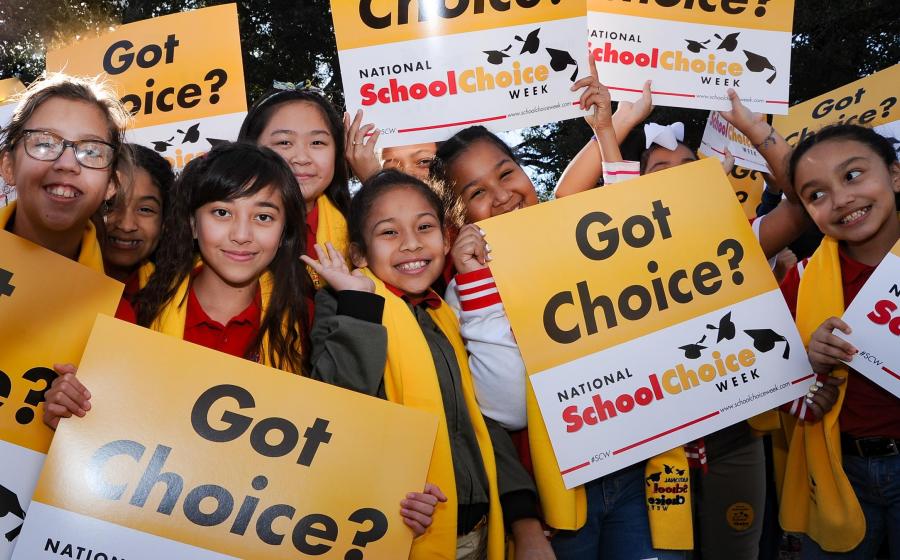
This week is National School Choice Week (Jan. 26–Feb. 1) - an opportunity to highlight the impact of education options. It celebrates how families can take control of their children’s education and find schools that meet their aspirations, values, and priorities.

But progress doesn’t happen automatically. Schools need to hire bilingual staff, offer culturally responsive programs, and provide parents with clear, easy-to-understand information about their options. Resources like opcionesescolares.com, and the bilingual events during National School Choice Week are valuable in helping families navigate these choices.

Education has the power to change lives, not just for children, but for entire families and communities. By giving parents the ability to choose the best educational path for their children, we’re opening doors to opportunity, hope, and a brighter future.

Krissia Campos Spivey is the senior director of Conoce tus Opciones Escolares, a National School Choice Awareness Foundation project that helps U.S. families who speak Spanish explore their K-12 education options and choose a great school for their children. Krissia is Salvadoran-American and lives in Wake Forest, North Carolina.


As K-12 enrollment shifts, families lead education´s evolution

(NewsUSA) - What would you do if you felt your child´s school wasn't helping them reach their full potential? For a growing number of parents, the answer is to look for alternatives. According to a recent survey, six out of ten parents considered switching their child’s school during the last year, reflecting the shifting expectations families have for education today.

As families move to new areas, their priorities for education often change. Smaller counties with fewer than 30,000 people have gained population, while more families are leaving the nation’s largest urban counties, according to the U.S. Census Bureau. These shifts are reshaping communities, and how parents think about their children’s education.

Public school enrollment has declined by 2.5% since 2019, with the largest decreases occurring in pre-K through 8th grade, according to the National Center for Education Statistics. These declines coincide with a rise in interest in other educational options, including public charter, magnet, private, online learning, homeschooling and microschooling. Parents are taking an active role in finding environments that meet their children’s unique needs, whether that means staying in the public school system or looking beyond it.

This decline is also tied to larger demographic trends. Birth rates in the United States have been falling for over a decade, with the Centers for Disease Control and Prevention reporting a 2% drop in births from 2022 to 2023. Lower birth rates mean fewer children entering school each year. Combined with population shifts, these trends are reshaping how and where families access education.

Younger parents, Black and Hispanic families, and military households are among those most likely to explore alternatives. For many, it’s not about dissatisfaction, it’s about seeking the best possible fit for their children’s needs, interests, and learning styles.

Traditional public schools serve millions of families, but declining enrollment reflects the growing need for more adaptable education options. Hawaii, for example, has seen a 6.5% drop in enrollment since 2019, while North Dakota has experienced a 2.5% increase. At the same time, charter school enrollment nationwide grew by more than 80,000 students last year, and homeschooling remains one of the fastest-growing education models. These trends reflect families’ increasing awareness of the variety of options available to them.

This January, National School Choice Week (Jan. 26 to Feb. 1) will provide families with an opportunity to explore these options. With over 27,000 events planned nationwide, parents can learn about public, charter, private, online, and homeschooling models to determine what works best for their children.

As interest, and enrollment, in different types of schools continues to change, states are responding by creating policies that empower parents to make choices between many different school types. That means more solutions, and more hope, for families who want to help their child succeed.

Shelby Doyle is the vice president of public awareness at the National School Choice Awareness Foundation, the 501(c)(3) nonprofit organization that hosts National School Choice Week each January and maintains the nation’s largest online portfolio of English- and Spanish-language school navigation resources. She lives in Nashville, TN with her family.

The Week that helps parents find the right school fit for their kids

(NewsUSA) - Fifteen years ago, when National School Choice Week began, the world of education looked very different. In some places, school choice options were slim, and many families wished there was more to explore as the festivities took place. Today, the school choice landscape is far more open, but with this growth comes complexity. This year from January 26 to February 1, the national celebration is more necessary than ever: families need help navigating a K-12 education system that is evolving rapidly.

The demand for school choice has surged in recent years. In the last 12 months, 6 in 10 parents considered new schools for their children, reflecting the growing awareness of school choice policies. Parents are talking about school choice more than ever and more likely to consider education options like microschooling, homeschooling, or private schools. No matter what type of school they choose - neighborhood public, charter, magnet, private, online, or micro - families increasingly believe that education is not one-size-fits-all.

Also, nearly half of Americans said, a few months ago, that they believe K-12 education is on the wrong track nationwide. Yet, paradoxically, many parents remain optimistic about their local schools. What this tells us is that education is very personal. Every parent wants to give their child the best possible future, no matter what type of schooling they need to succeed.

National School Choice Week will be the first step toward choosing a school for the fall for millions of parents across the country. Through more than 27,000 events from open houses to citywide school fairs, the Week offers a platform for families to reflect, connect, and plan. Across its 15-year history, National School Choice Week has hosted 236,746 events and engaged with more than 9 million parents, helping them explore options ranging from traditional public schools to public charter, public magnet, private, online, at-home, and nontraditional options. 

What I’ve learned from years of National School Choice Week celebrations is that families are eager for better options, but they often feel stymied by the barriers to choosing them. It is not enough to create education options; we have to ensure families can access them and understand how to make the best decision for their children. That is what makes National School Choice Week so powerful. It bridges the gap between awareness and action, giving parents the tools they need.  

What National School Choice Week reminds us each year is that education is deeply personal. Behind every statistic is a family making decisions that will shape a child’s future. This celebration isn’t just about celebrating options, it’s about making options work. 

Fifteen years ago, this celebration was just an idea. Today, it’s a national event that empowers millions of families to make decisions that shape futures. It’s a reminder that when families are equipped with the right tools, anything is possible for their children. 

Shelby Doyle is the vice president of public awareness at the National School Choice Awareness Foundation, the 501(c)(3) nonprofit organization that hosts National School Choice Week each January and maintains the nation’s largest online portfolio of English- and Spanish-language school navigation resources. 


Subscribe to Education