
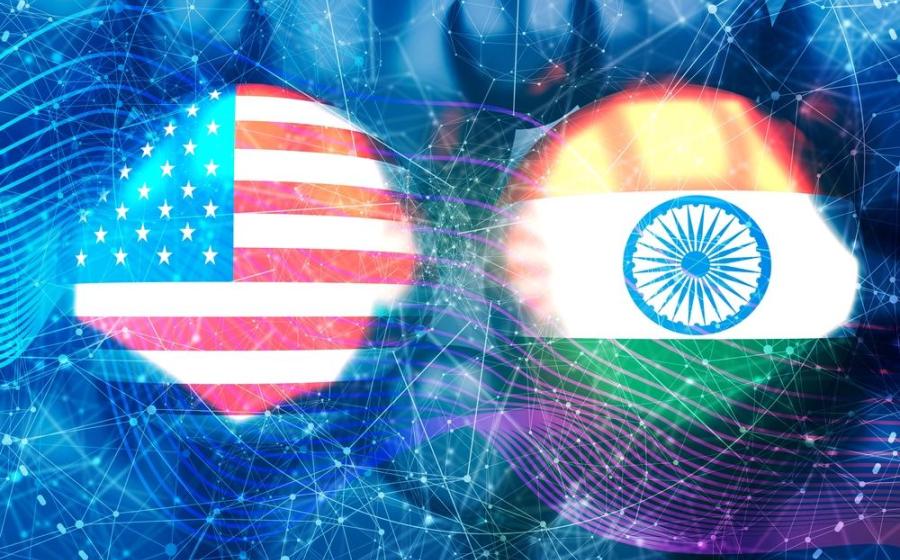
The U.S. and India Anchor Their AI Partnership
(NewsUSA) - For both India and the United States, leadership in artificial intelligence (AI) and emerging technologies will impact not only domestic prosperity and resilience, but also their ability to establish their values and systems to define the global digital order, according to a new report from the Special Competitive Studies Project (SCSP) and ORF America.
The report includes insights from a pair of recent meeting in Washington, D.C., and New Delhi, India, in which more than 150 leaders from industry, government, academia, and the civilian sector shared insights and developed a plan for how the two countries can translate their shared strategic interest in AI into a long-term advantage for both.
The report focuses on four core pillars of action—applications, infrastructure, talent, and policy—with recommendations for how the U.S. and India can work together to ensure the development and adoption of trusted AI around the world.
Applications. Priorities for partnership in AI applications include establishing a public-private U.S.-India AI Coalition to prioritize commercial and dual-use applications in areas of impact; streamlining cybersecurity cooperation by encouraging U.S. and Indian agencies to develop joint threat-sharing protocols for AI-related cyber threats; strengthening Digital Public Infrastructure by creating an integration portal for U.S. firms to deploy data security solutions; and integrating AI into defense dialogues, capabilities development, and joint military exercises to align operational concepts and reinforce deterrence.
AI Infrastructure. To stay at the leading edge of AI and technology innovation, the report calls for establishing a comprehensive U.S.–India Full-Stack AI Infrastructure and Technology Program to identify and export integrated capabilities. Other key actions include connecting the digital and industrial foundations of AI stacks to grow respective, domestic infrastructure capacities in order to stay at the leading edge of AI and technology innovation. Key actions involve establishing and synchronizing U.S. and Indian semiconductor policies to ensure supply chain resilience and remove investment hurdles; mobilizing a Joint AI Infrastructure Financing and Investment Program to secure capital for trusted projects; creating a Single-Window Clearance Mechanism under Invest India for fast-tracking project permitting approvals; and instituting a supply chain program to export mid-life U.S. GPUs to India for population scale AI use cases.
Talent. To create the mutually reinforcing high-skill ecosystems to meet the demands of emerging industries, the report’s recommendations are to conduct yearly Joint AI Labor-Market Mapping to align education and training programs with workforce needs. Other goals include establishing a standardized certification process for AI talent to set globally recognized benchmarks; creating a Binational AI Training & Apprenticeship Network linking U.S. and Indian institutions for hands-on AI skills; and launching a Joint U.S.-India Research and Innovation Accelerator to align funding, capital, and intellectual property protections for joint research and development projects.
Policies. The report calls for aligning policy foundations to improve cooperation between both countries and deepen the interoperability, trust, and resilience of the U.S. and India’s respective AI and technology ecosystems. Policy actions include establishing a standing U.S.-India AI Standards Council to identify critical standards needed to enable AI cooperation, synchronizing them, and creating a pathway for mutual recognition of certification of AI models and applications.
Visit scsp.ai to learn more.

 - A growing number of consumers are getting answers from search engines without ever clicking on a website.
 - As artificial intelligence becomes more integrated into search engines, many local businesses are discovering a troubling reality: they are no longer appearing in search results the way they once did.
 - As search engines evolve into AI-driven answer platforms, many local businesses are discovering they are no longer showing up where it matters most.
 - The Department of Defense's, now renamed the Department of War by the current administration, acquisitions, notoriously sluggish and inefficient, is undergoing a change to make its historically sluggish acquisitions system more agile and responsive.
 - Artificial intelligence (AI) continues to integrate into our daily lives with the rise of AI “companions,” that are designed to provide users with constant interaction and also may be hijacked by intelligence services from United States adversaries, according to experts at the Special Competitive Studies Project (SCSP), a nonprofit and nonpartisan initiative with a goal of making recommendations to strengthen America's long-term competitiveness in AI.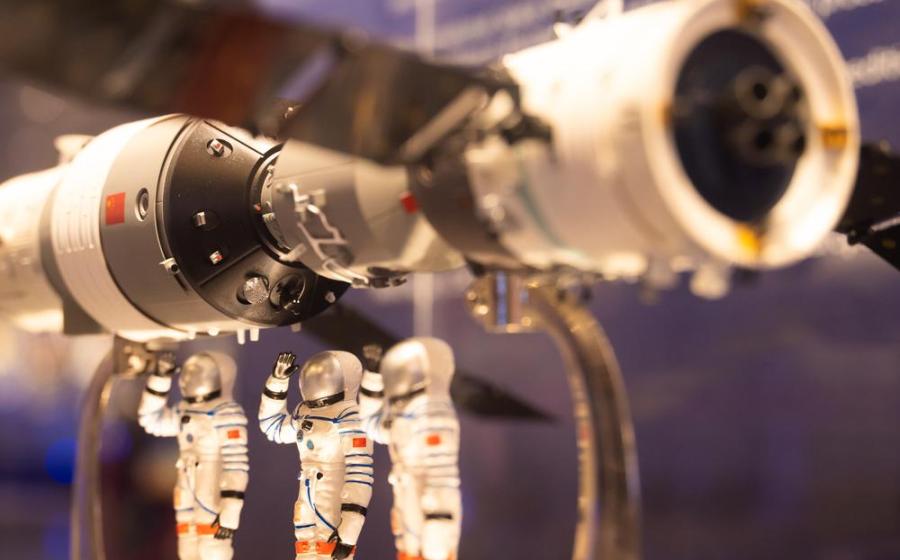
 - The new captains of China’s growing space industry are riding the new wave of a hybrid technology ecosystem that combines the size and infrastructure of large, state-owned space-oriented businesses and the nimble innovation of startups, according to a new report from the Special Competitive Studies Project (SCSP), a nonprofit and nonpartisan initiative with a goal of making recommendations to strengthen America's long-term competitiveness in AI.
 - Artificial intelligence is poised to be a game-changer in managing the increasingly congested and potentially contested domain of space, from Earth’s orbit to the Moon and beyond, according to a new podcast from the Special Competitive Studies Project (SCSP), a nonprofit and nonpartisan initiative with a goal of making recommendations to strengthen America's long-term competitiveness in AI.
 - Emerging sophisticated artificial intelligence (AI) is poised to drive the most profound changes to the world of spy craft since the advent of the internet, according to experts at the Special Competitive Studies Project (SCSP), a nonprofit and nonpartisan initiative with a goal of making recommendations to strengthen America's long-term competitiveness in AI.
 - The United States and India sit front and center in the global emerging technology competition, and a recent meeting have sparked promising collaboration.