Smartphone App Offers Flexible, Affordable Way for Working Adults to Finish Accredited College Degrees
(NewsUSA) - A Michigan university unveils SOAR™, a new smartphone-based degree program that brings college within reach for busy adults — at half the cost.
For millions of adults, finishing college was never about ability — it was about circumstances. Jobs, family responsibilities and rising tuition costs often forced higher education onto the back burner.
About 750 adults leave college every day in the United States. Most don’t fail academically; they simply run out of time, money, or both. For those who still dream of completing their degrees, the barriers can feel insurmountable.
That’s where the SOAR™ by Cornerstone University app comes in.
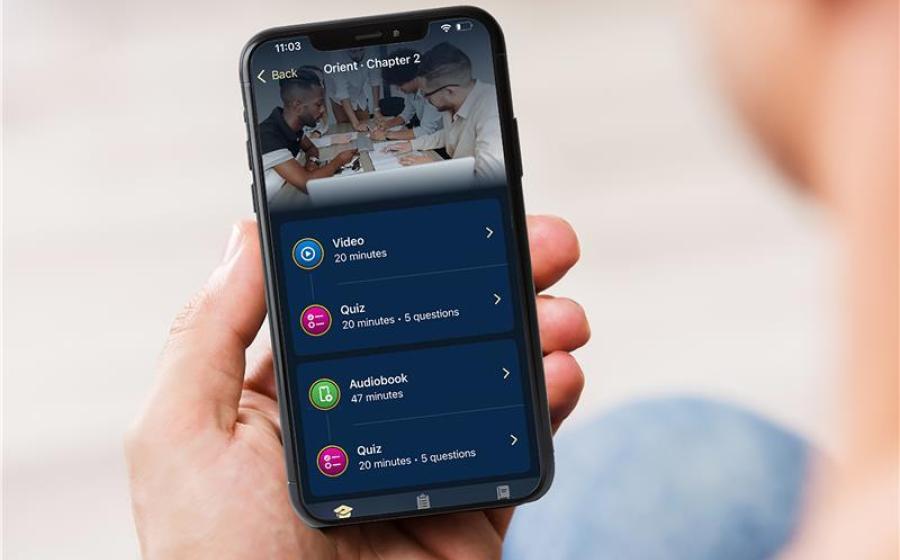
Launched in 2025, SOAR is the nation’s first fully accredited bachelor’s degree designed to be completed entirely on a smartphone. The program currently offers a Bachelor of Science in strategic business management, preparing students with leadership and business skills employers consistently demand.
SOAR stands out for three reasons. It’s half the cost of the average accredited business degree, making it one of the most affordable in the nation. It’s flexible, with new classes starting every two weeks and lessons delivered in short, smartphone-ready modules so students can learn on the go. And it’s respected, carrying full accreditation from the Higher Learning Commission.
For adults in the workforce, that means finishing a degree without stepping away from their jobs or families. For many parents, SOAR also removes the difficult choice between investing in their children’s tuition and finally finishing their own. With radically affordable tuition, both become possible.
“For too long, adults who wanted to go back to school were forced to choose between their education and their responsibilities,” said Dr. Gerson Moreno-Riaño, president of Cornerstone University. “SOAR was built to remove those barriers — it’s a degree that works with your life, not against it.”
Take Alicia, a single mom in Michigan who enrolled this year. “I like to SOAR when I’m getting ready in the morning and driving to work,” she said. “I often log into the SOAR app after dinner when my little one is settled or in bed.”
Her story reflects the core mission of SOAR. It makes higher education accessible to those who thought the door had closed.
With looming retirements creating leadership gaps in the workforce, programs like SOAR aren’t just helping individuals — they’re preparing the next generation of business leaders. And this is just the start. New disciplines and advanced degrees are already in development, expanding options for learners who wish to continue their studies beyond a bachelor’s degree.
For adults ready to reclaim their dream of finishing college, SOAR offers a path forward: half the cost, fully accredited, and designed for real life.
Learn more about SOAR™ by Cornerstone University at go.cornerstone.edu/SOAR1.

 - It’s testing season—and students are feeling the pressure. Between midterms, SATs, coursework, and activities, staying focused and confident can be a real challenge.
 - Plus, meet the new Rich Cream with newly formulated RoC Retinol 7x more effective than standard Retinol
 Line Smoothing Eye Cream
 Line Smoothing Night Serum Capsules
 Line Smoothing Max Hydration Cream
 - Obscure lawsuits don’t just hurt corporations—they can hit consumers’ wallets and limit their choices.
 - The federal government’s release of America’s AI Action Plan marks the most consequential artificial intelligence policy development of the current administration to date, according to experts at the Special Competitive Studies Project (SCSP), a nonprofit and nonpartisan initiative with a goal of making recommendations to strengthen America's long-term competitiveness in AI.
 - Los avances acelerados en inteligencia artificial (IA) y otras tecnologías emergentes están transformando rápidamente el mercado laboral, con aproximadamente
 - Choosing to drive when not fully alert is a form of impaired driving. In fact, drowsy driving causes one in every five deadly motor vehicle crashes. With frequent nighttime awakenings, early school drop-offs, and competing demands, parents and families are especially at risk of drowsy driving.


 -
-  “My Mountains” by Chris Smith
 “Searching for Bowlby” by C. V. Wooster
 “A World Gone Mad: The True Story of Surviving a Dictatorship” by Gretel Timan
 “The Death Penalty Revisited” by Willard Bakeman
 - Swift advances in artificial intelligence (AI) and other emerging technologies are rapidly changing the labor market, with approximately